

Your practice may look healthy from the outside. Providers are being added, the schedule is filling, and patients are being seen.
Then small front-end problems start to stack up. Benefits are verified differently by staff, an authorization sits in one inbox, credentialing starts late, and no one is fully sure whether Optum, Carelon, Magellan, or the medical plan manages behavioral health benefits.
Eventually, one denial or write-off forces the question: Does our practice need a full-time patient access director?
Quick answer: Not every solo or small-group behavioral health practice needs a full-time hire, but every practice needs clear ownership of patient access. A fractional patient access director can provide the same front-end leadership, systems, payer knowledge, and accountability without requiring a practice to carry a full-time director’s salary and benefits.
What does a patient access director actually own?
Patient access is everything that must be correct before a service is delivered and before the practice expects payment for that service.
For a behavioral health practice, the role typically owns:
- Insurance and benefit verification
- Behavioral health carve-out routing
- Network and participation checks
- Prior authorization and reauthorization
- Credentialing and payer enrollment
- CAQH profile maintenance and re-attestation tracking
- Front-end denial prevention
- Financial clearance before the visit
- Point-of-service collections processes
- Front-desk standard operating procedures
- Staff training and quality checks
- Tracking of open access issues and payer follow-up needs
This is more than answering phones or confirming appointments. It is a set of checkpoints that helps the right patient reach the right provider with the right coverage information, authorization status, and financial expectations.
A private practice management platform can store information, and automation can reduce repetitive work. Neither replaces an experienced person who decides what must be verified, which payer rules apply, what needs escalation, and how the workflow should run.
What does the role not include?
A patient access director is not the same as a billing director or a full revenue cycle manager.
The front-end role does not include:
- Submitting claims
- Posting payments
- Following up on unpaid claims
- Managing back-end billing
The work is focused on front-end prevention, not back-end claim activity.
When do front-end cracks begin to show?
Consider a common growth pattern.
A practice adds two clinicians and opens appointments several weeks out. The owner feels encouraged. The front desk is busy, but the workflow still appears manageable.
Then the cracks begin:
- One staff member verifies benefits through a payer portal while another relies on the insurance card and a quick phone call.
- A patient’s medical plan is confirmed, but no one checks whether Optum Behavioral Health, Carelon Behavioral Health, or Magellan manages the behavioral benefit.
- An authorization is approved for a limited number of sessions, but the expiration date is not tracked, or a TMS or Spravato request is sent to the wrong department without the required documentation.
- A new PMHNP is scheduled before payer enrollment is complete, or a CAQH profile contains an old address or has not been re-attested.
- Staff members give different answers about copays, deductibles, visit limits, or out-of-network benefits.
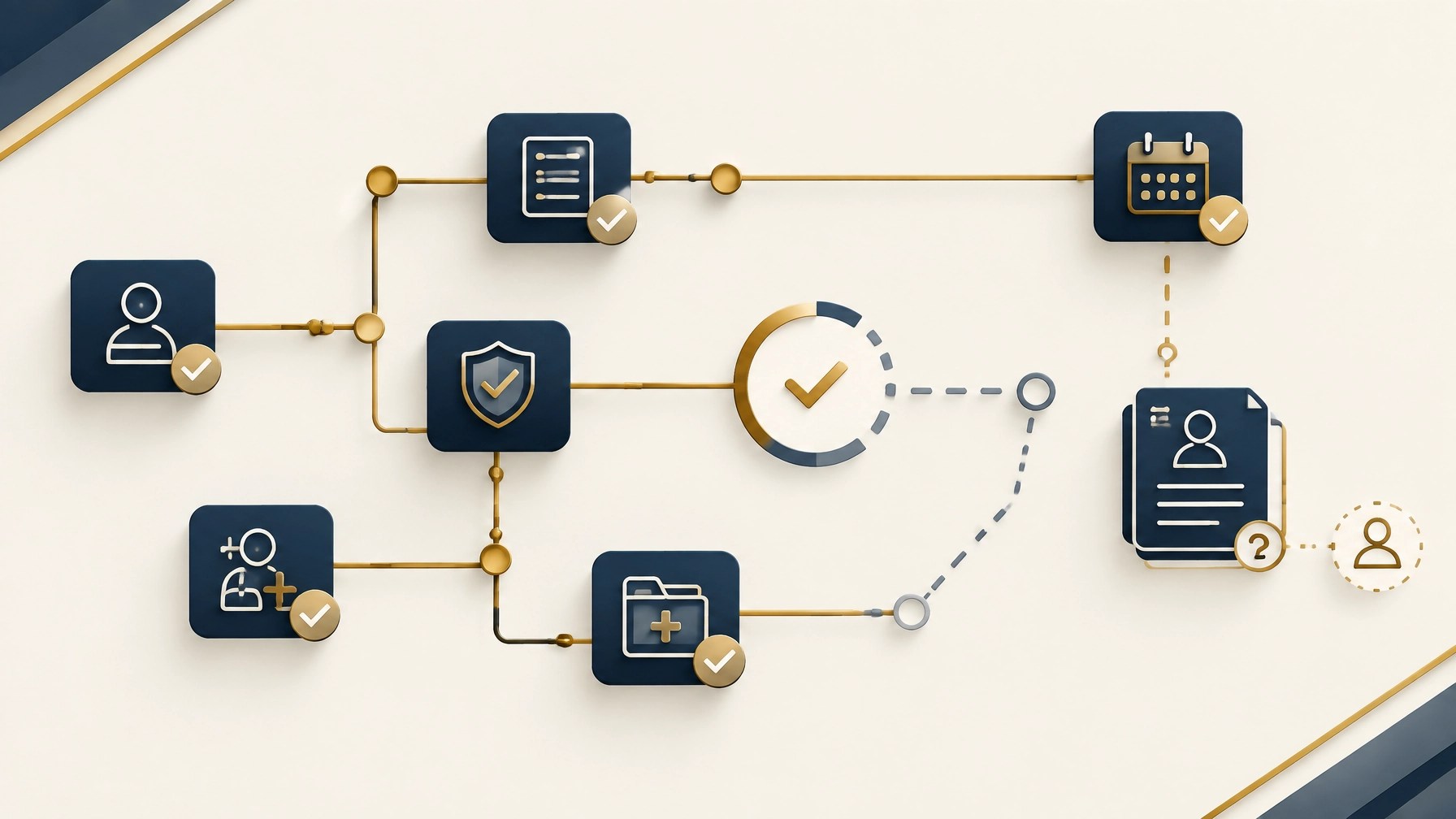
Each issue may seem small. Together, they create a practice where patient access is a task list instead of a controlled system.
Why is behavioral health patient access more specialized?
Behavioral health benefits are often administered differently from medical benefits.
A patient may have a familiar insurance company on the front of the card while the behavioral health benefit is managed through a separate organization such as Optum Behavioral Health, Carelon Behavioral Health, Magellan, or another delegated administrator.
That can affect:
- Which portal staff use, and where eligibility is checked
- Whether the provider is active in the behavioral network and whether prior authorization is required
- Which forms, records, provider details, dates, and approved units must match
A strong office manager may be excellent at scheduling and daily operations, but that does not automatically mean they know how behavioral carve-outs, CAQH, payer enrollment, and authorization tracking work together. For related guidance, see Almonord’s article on prior authorization for TMS.
What happens when no one owns the front end?
The practice in our example receives a denial for a series of visits. The patient was active, and the provider expected the services to be covered.
The issue was not necessarily that the payer was impossible to work with. The practice had not confirmed the behavioral health network, authorization requirement, or correct effective dates before the visits occurred.
That denial exposes the real problem: no one owned the complete patient access process. The front desk completed individual tasks, but no one was responsible for making sure those tasks connected.
What does a full-time patient access director require?
A full-time hire can be the right answer for a larger organization. However, the decision involves more than salary.
For a national benchmark, Salary.com’s Patient Access Director data lists a 2026 average above $130,000, with a broad range that varies by market, organization size, experience, and scope. Comparable outpatient and community health roles may be lower. An AccessHealth director posting lists a range of $90,000 to $110,000.
A practice also needs to account for:
- Benefits, payroll costs, recruiting, and onboarding
- Ramp time to learn the practice’s payer mix
- Training on behavioral carve-outs and portal workflows
- Time to build SOPs, trackers, and quality controls
- Coverage during vacation, illness, or leave
- The risk of relying on one person with no experienced escalation partner
When is a full-time hire the right answer?
A full-time patient access director may make sense when your practice:
- Has a large front-desk or access team
- Is adding providers continuously
- Has several locations or complex scheduling volume
- Is enrolling with multiple new payers
- Offers services with substantial authorization requirements
- Needs daily supervision of a larger access department
- Can support the salary, benefits, backup coverage, and professional development
The question is not whether the role is valuable. It is whether the current volume justifies a full-time position.
When is a fractional patient access director the better fit?
A fractional model is designed for practices that need the function but not a full-time employee.
A fractional patient access director can help build and oversee:
- A consistent insurance verification process
- A behavioral carve-out decision tree
- Payer-specific authorization checklists
- CAQH, credentialing, and authorization tracking
- Provider enrollment workflows
- Front-desk SOPs, training, competency checks, and escalation steps
At Almonord AI Solutions, Belinda Joseph brings 20 years of hospital patient-access experience to behavioral health practices nationwide. Based in Dallas-Fort Worth, she works with solo providers and group practices as a Fractional Patient Access Director.

Full-time hire versus fractional patient access director
| Area | Full-time hire | Fractional patient access director |
|---|---|---|
| Scope | Dedicated employee with fixed internal capacity | Defined front-end scope matched to need |
| Cost | Salary, benefits, hiring, onboarding, coverage | Part-time support without full employee overhead |
| Ramp time | Learns payer mix, systems, and workflows | Brings front-end behavioral health experience |
| Vacation or leave | Coverage may depend on one person | Built for continuity and escalation support |
| System building | Varies by hire's time and experience | Includes SOPs, trackers, training, controls |
What should a practice do next?
Start by asking who owns each front-end checkpoint. Who verifies benefits, confirms the behavioral carve-out, tracks authorization expiration, confirms a new provider is enrolled before scheduling, checks CAQH, and trains the front desk when a payer changes its process?
If the answer changes depending on the task, your practice may need a patient access system with a clear owner before it needs a full-time director. Almonord does not provide back-end billing or marketing. The focus is the front end: verification, authorization, credentialing, enrollment, denial prevention, financial clearance, and front-desk systems.
If you are unsure whether a full-time hire, fractional support, or a stronger internal workflow is right for your practice, book a free Revenue Leak Audit at almonordaisolutions.com. We will help identify where your patient access process is exposed and what practical fixes should come first.
Frequently asked questions
Does every behavioral health practice need a full-time patient access director?
No, but every behavioral health practice needs clear ownership of verification, authorization, credentialing, and front-desk access systems.
What is a fractional patient access director?
A fractional patient access director provides part-time or project-based leadership for the practice’s front-end patient access operations.
Can private practice management software replace a patient access director?
No, software can organize information and automate tasks, but it does not replace experienced oversight of payer rules, carve-outs, exceptions, and escalation decisions.
When should a practice consider hiring a full-time patient access director?
A full-time hire may be appropriate when access volume, locations, provider growth, payer complexity, or staff supervision requires daily dedicated leadership.
This article is for informational purposes only and is not medical, legal, or payer-specific advice. Salary ranges and payer requirements vary by location, organization, plan, and current policy.